Alternative Investments Beyond Stocks and Bonds
DECEMBER 23, 2025

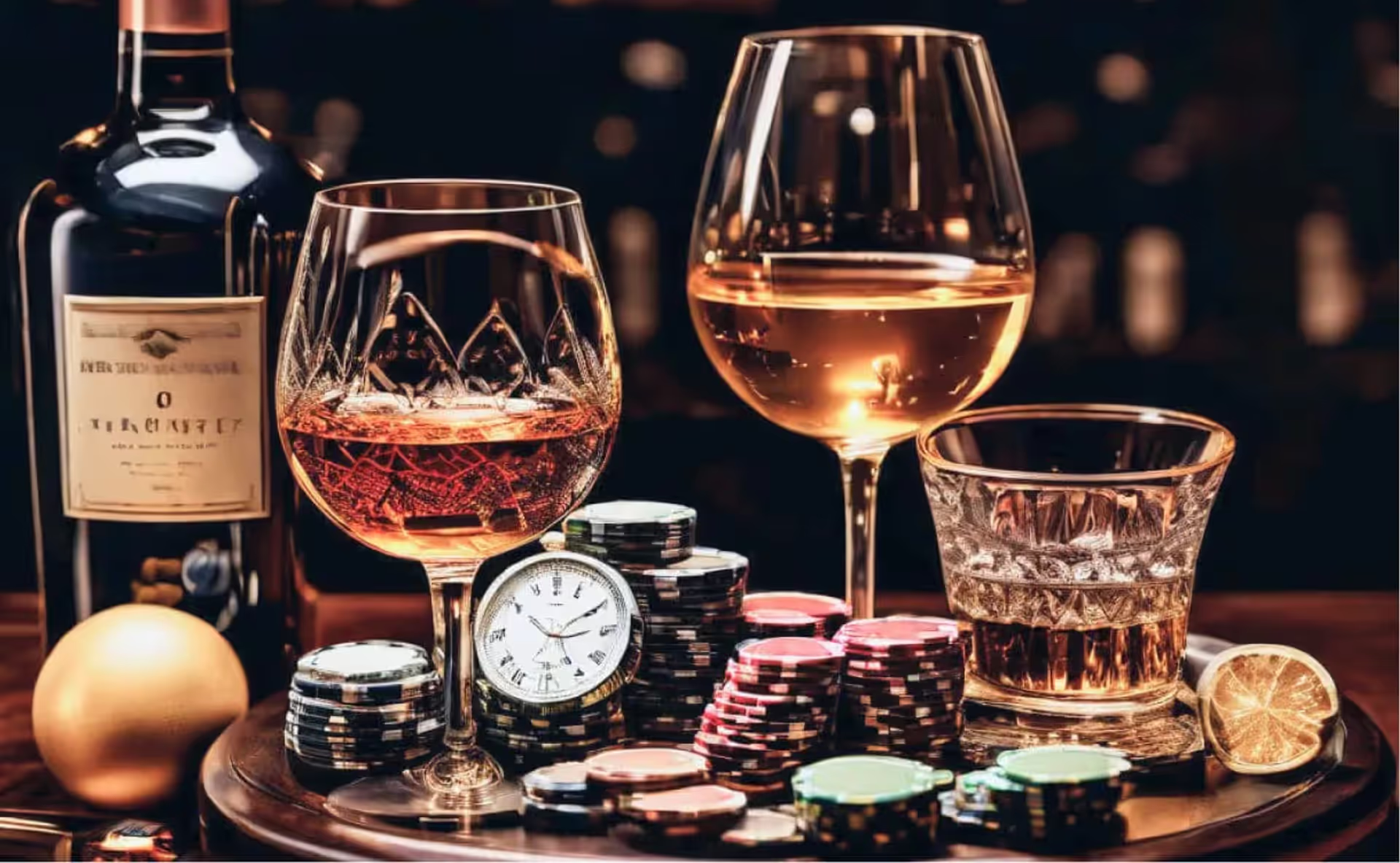
In today's financial landscape, investors are increasingly looking for ways to diversify their portfolios beyond traditional stocks, bonds, and real estate, seeking assets that can provide both financial returns and personal enjoyment. With fluctuating markets, political instability, and unprecedented economic events becoming more frequent, alternative investments have garnered significant attention from both institutional and individual investors. Among the most intriguing of these unconventional assets are fine wine, whiskey, and luxury watches, three categories that combine potential financial appreciation with tangible ownership of beautiful and culturally significant objects. These assets not only offer a potential hedge against economic volatility and inflation but also represent lifestyle investments with deep historical value, exceptional craftsmanship, and enduring cultural significance that transcends mere financial considerations.
This comprehensive article delves deep into the world of fine wine, whiskey, and watches as investment options, exploring the unique characteristics of each asset class and how they can complement a well-constructed investment portfolio. We will examine how each asset class can offer attractive returns based on historical performance and current market dynamics, the specific risks involved that investors must understand and manage, and how to create a diversified portfolio that includes these tangible investments alongside more traditional financial assets. The appeal of these investments extends beyond mere financial return; they offer the satisfaction of owning rare and beautiful objects, the pleasure of building a collection over time, and the opportunity to develop expertise in fascinating areas of human craftsmanship and culture. By the end of this guide, you will have a comprehensive understanding of how these alternative assets can complement and enhance a modern investment strategy while providing enjoyment that purely financial assets simply cannot match.
The investment landscape is constantly evolving as investors respond to changing economic conditions, new opportunities, and shifting risk perceptions. While traditional assets such as stocks, bonds, and real estate continue to dominate most investment portfolios and remain the foundation of wealth building for the majority of investors, a growing number of sophisticated investors are turning to alternative assets to diversify their holdings and hedge against risks that traditional assets may not adequately address. The prolonged low-interest-rate environment that followed the 2008 financial crisis, combined with periods of significant stock market volatility, has spurred substantial interest in unconventional investments that may offer different return patterns and risk characteristics. This search for diversification and protection has led investors to explore asset classes that were once considered the exclusive domain of collectors and hobbyists, transforming categories like fine wine, rare whiskey, and luxury watches into legitimate investment vehicles with established markets and professional infrastructure.
Alternative assets, including fine art, collectibles, cryptocurrencies, and tangible goods like wine, whiskey, and watches, offer a way to preserve wealth while providing the possibility of long-term appreciation that may be uncorrelated with traditional financial markets. These asset classes have demonstrated resilience during times of economic uncertainty, often maintaining or even increasing their value when stocks and bonds have declined, making them attractive to investors seeking to protect and grow their wealth across different market conditions. The growing acceptance of alternative investments is reflected in the increasing sophistication of the markets that support them, with specialized auction houses, dedicated investment funds, professional storage facilities, and authentication services all contributing to an ecosystem that makes these investments more accessible and secure. For investors willing to develop the expertise necessary to navigate these markets, alternative assets offer opportunities that simply do not exist within the traditional investment universe.
There are several compelling reasons for the growing popularity of unconventional assets among investors of all types, from wealthy collectors to middle-class individuals seeking to diversify their retirement portfolios. Perhaps the most fundamental appeal is tangible value: unlike stocks or bonds, which are digital representations of ownership in corporations or debt obligations, wine, whiskey, and watches are physical, tangible assets that investors can see, touch, and in some cases enjoy personally. This personal connection between investor and investment creates a relationship that purely financial assets cannot replicate, making these investments more meaningful to collectors and investors alike. Many investors find deep satisfaction in building a collection of beautiful objects over time, learning about the history and craftsmanship behind their holdings, and sharing their passion with like-minded enthusiasts. This emotional dimension of alternative investing should not be underestimated, as it often provides the motivation to develop the expertise necessary for success in these markets.
Another significant driver of interest in unconventional assets is their historical role as a hedge against inflation, protecting purchasing power when fiat currencies lose value. Tangible assets like luxury goods, fine art, and rare collectibles have traditionally maintained their real value even as currencies have depreciated, making them a protective measure during periods of monetary instability or aggressive central bank intervention. The cultural and historical significance of these investments adds another dimension of appeal, as investing in wine, whiskey, and watches is about more than just financial returns; these assets carry cultural meaning, represent exceptional craftsmanship, and connect owners to traditions of excellence that span generations and centuries. Finally, the rise of online marketplaces, auction platforms, and specialized investment funds has dramatically increased liquidity in these markets, making it easier than ever to buy and sell unconventional assets and providing transparency about pricing and market conditions that was previously unavailable to individual investors.
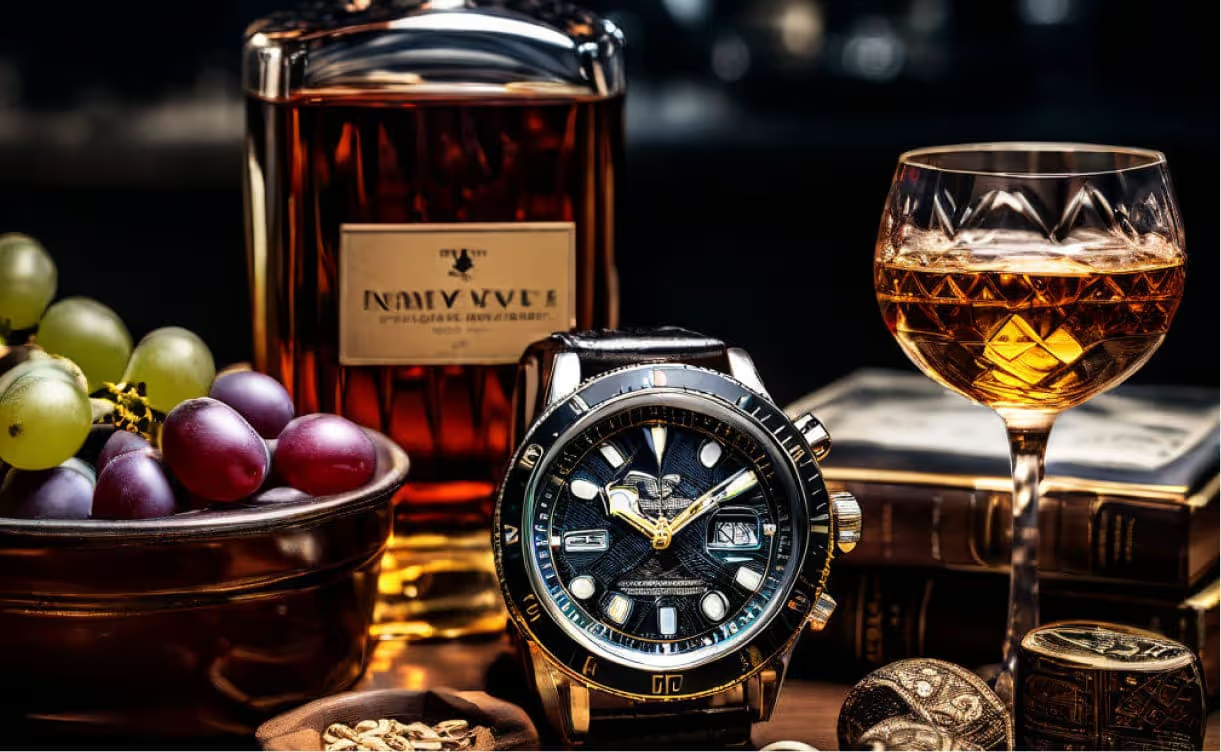
Wine has long been a coveted collectible, appreciated for centuries for its craftsmanship, aging potential, and the pleasure it provides when consumed at the perfect moment. However, in recent decades, fine wine has also emerged as a legitimate investment vehicle with a track record of performance that rivals and sometimes exceeds traditional financial assets. The fine wine market consists of highly sought-after vintages from established regions such as Bordeaux and Burgundy in France, Tuscany in Italy, and emerging regions like Napa Valley in California and certain areas of Australia and South America. These wines are produced by estates with reputations for exceptional quality built over decades or even centuries, and their limited production combined with global demand creates the conditions for price appreciation over time. For comprehensive data and analysis on the fine wine market, investors can explore resources at Liv-ex, the global marketplace for fine wine, which provides indices, trading data, and market intelligence that help investors track performance and identify opportunities.
The fundamental appeal of investing in wine lies in its scarcity and the natural process by which supply diminishes over time. Fine wine is produced in limited quantities each vintage, constrained by the size of vineyards and the variable quality that depends on weather conditions in any given year. As bottles are consumed over time by collectors and wine enthusiasts around the world, the remaining supply of any particular vintage decreases steadily, creating natural upward pressure on prices for the bottles that remain. This scarcity is compounded by the fact that fine wine can improve with age, developing complexity and character that makes properly stored older vintages more desirable than young wines, at least up to a point that varies by wine and vintage. The combination of diminishing supply and potentially increasing desirability as wines mature creates the conditions for significant price appreciation, particularly for the most sought-after producers and the best vintages.
Wine investments have delivered impressive returns over extended time periods, with investment-grade wines from premium regions consistently generating appreciation that has attracted serious investor attention. The performance of wines from regions such as Bordeaux and Burgundy has often surpassed that of global stock markets over comparable periods, though with different patterns of volatility and return distribution. During the 2008 financial crisis, when traditional markets suffered severe losses and investor confidence was shaken, the fine wine market proved relatively resilient, maintaining more stable values than many financial assets and recovering strongly as the global economy improved. Burgundy wines in particular have seen remarkable appreciation in recent years, driven by strong demand from Asian markets where wine collecting has become increasingly popular among wealthy individuals, combined with the extremely limited production of the region's most prestigious estates. The concentration of demand on a small number of highly regarded producers has created dramatic price increases for the most coveted wines, though this concentration also increases risk if tastes or market conditions change.
Investing in fine wine requires a strategic approach similar to building any investment portfolio, combining knowledge of the asset class with disciplined selection and risk management. Successful wine investors typically focus on blue-chip wines from established producers with long histories of quality and consistent demand, as these wines have the deepest markets and the most reliable appreciation patterns. Names like Château Lafite Rothschild, Château Margaux, Domaine de la Romanée-Conti, and Penfolds Grange are considered the equivalent of blue-chip stocks in the wine world, combining prestige with reliable demand from collectors worldwide. Diversification across regions, producers, and vintages is essential for managing risk, as different wines may perform differently based on critical reviews, changing tastes, and regional economic conditions. Wine ratings from respected critics such as Robert Parker, Wine Spectator, and Jancis Robinson carry significant weight in the market, and high scores can drive demand and increase the value of a wine substantially, making these ratings an important factor in investment decisions.
Proper storage is absolutely crucial for wine investments, as wine is a living product that can be damaged by improper conditions, potentially destroying significant value. Wine needs to be stored in optimal conditions with consistent cool temperatures, appropriate humidity levels, darkness, and the absence of vibration, all of which protect the wine from deterioration and allow it to age gracefully. Many serious wine investors use professional wine storage facilities that maintain these conditions reliably and provide insurance, inventory management, and sometimes direct access to trading platforms that facilitate buying and selling. The cost of professional storage must be factored into investment returns, as ongoing fees can reduce the net appreciation of a wine collection over time. Authentication is another critical consideration in wine investment, as the fine wine market has unfortunately seen instances of fraud and counterfeiting, particularly for the most valuable and sought-after bottles. Verifying the provenance and authenticity of a wine before purchase is essential, and reputable merchants and auction houses typically provide documentation of a bottle's history and authenticity that helps protect buyers from fraud.
Like any investment, wine comes with risks that investors must understand and accept. Market fluctuations can affect wine values, with prices subject to the same supply and demand dynamics that influence any market. Changing consumer preferences can shift demand away from previously popular regions or styles, potentially leaving investors with wines that are less desirable than when they were purchased. The physical nature of wine creates risks that purely financial assets do not face, including the possibility of damage during shipping, storage failures, or natural disasters that could destroy valuable collections. Wine also carries the inherent risk of spoilage or deterioration if bottles are damaged or improperly stored, turning valuable investments into worthless liquid. It is important to research thoroughly, stay informed about market trends and expert opinions, and work with reputable merchants, storage facilities, and auction houses that can help protect against these various risks.
Whiskey has experienced a remarkable surge in popularity as an investment asset over the past decade, becoming one of the fastest-growing categories within the alternative investment universe. The global demand for premium and rare whiskey, particularly single malt Scotch whiskey from Scotland and Japanese whiskey from distilleries like Yamazaki, Hakushu, and Nikka, has skyrocketed as collectors and investors have recognized both the quality of these spirits and their potential for appreciation. Whiskey auctions have regularly set record-breaking prices, with rare bottles fetching hundreds of thousands or even millions of dollars from collectors willing to pay premium prices for exceptional examples. This growth in investor interest has been supported by the development of professional infrastructure including dedicated auction houses, specialized storage facilities, and investment funds focused on rare whiskey, all of which have made the market more accessible and transparent for investors. For market data, auction results, and analysis of the whiskey investment market, investors can consult resources at Rare Whisky 101, which tracks indices and provides insights into market trends and valuation.
One of the key drivers behind whiskey's rise as an investment asset is the tremendous increase in global consumption, particularly in Asian markets where appreciation for fine whiskey has grown dramatically. China, Japan, South Korea, and other Asian countries have become major markets for premium whiskey, with collectors and enthusiasts willing to pay substantial premiums for limited-edition bottles and rare vintages from respected distilleries. Additionally, whiskey shares with wine an intrinsic aging factor that can contribute to value appreciation. While whiskey does not continue to age once bottled, whiskey that has been aged for extended periods in the cask often commands higher prices, and older bottles from previous eras of distillery production have become highly collectible. Bottles from renowned distilleries such as Macallan, Glenfiddich, Bowmore, and Japanese producers have become highly sought after both for their quality as spirits and for their investment potential, creating a market where serious collectors compete for rare examples.
Several key factors contribute to the potential value of a whiskey investment, and understanding these factors is essential for making informed decisions about which bottles to acquire. The reputation of the distillery is perhaps the most fundamental consideration, as whiskey from renowned producers tends to hold its value better over time and attracts more consistent demand from collectors. Brands like Macallan, GlenDronach, Bowmore, and the Japanese distilleries of Yamazaki and Hakushu have established strong track records of producing high-quality whiskey that commands premium prices, and bottles from these producers are generally considered safer investments than those from lesser-known distilleries. The age and rarity of a bottle are also crucial factors, with limited-edition releases, single cask bottlings, and discontinued expressions often fetching higher prices due to their scarcity. Whiskey from distilleries that have closed, sometimes called silent or mothballed distilleries, can be particularly valuable because no additional supply will ever be produced, making remaining bottles increasingly rare over time.
The condition of a bottle, its original packaging, and the integrity of its labeling and seal all affect investment value significantly, as collectors place a premium on bottles that remain in pristine original condition. Intact seals, unblemished labels, original boxes and presentation cases, and complete documentation all contribute to a bottle's desirability and value in the collector market. When investing in whiskey, it is important to focus on bottles with established track records of appreciation and strong demand from collectors, avoiding the temptation to speculate on lesser-known bottlings that may not find buyers when you wish to sell. Storage is critical for maintaining whiskey value, though the requirements differ from wine. Whiskey should be stored upright rather than on its side to prevent the cork from prolonged contact with the spirit, kept in a cool dark place away from temperature fluctuations and direct sunlight. Many serious collectors use professional whiskey vaults that provide optimal storage conditions, insurance, and inventory management services similar to those available for wine storage.
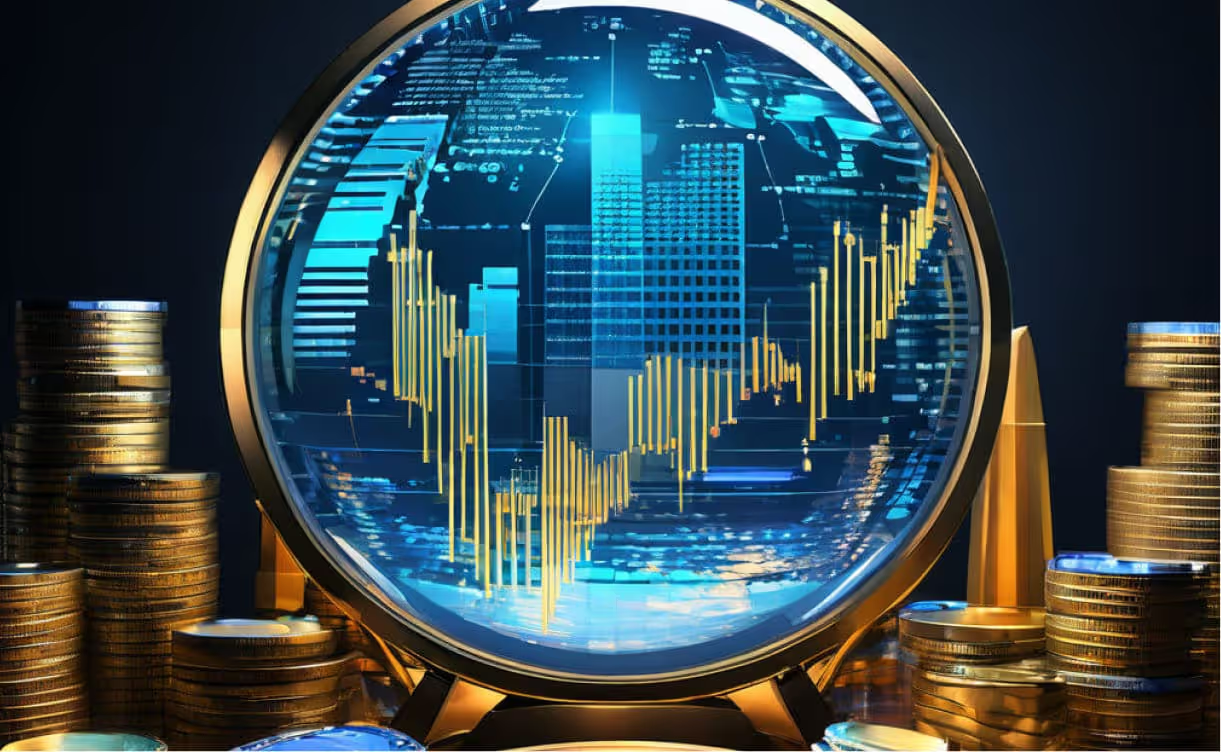
Luxury watches represent far more than mere timekeeping instruments; they are enduring symbols of craftsmanship, status, engineering excellence, and historical tradition that have captivated collectors for generations. For centuries, watches from prestigious manufacturers like Rolex, Patek Philippe, Audemars Piguet, and Vacheron Constantin have been coveted by enthusiasts and collectors who appreciate the extraordinary skill and attention to detail that goes into creating these miniature mechanical marvels. However, in recent years, these timepieces have also emerged as serious investment assets with track records of appreciation that rival traditional financial instruments. The appeal of luxury watches as investments lies in their combination of rarity, durability, cultural significance, and the passionate collector community that sustains demand across generations. Unlike many other luxury goods that depreciate once purchased, watches from the most prestigious brands can appreciate substantially over time, particularly limited editions, vintage models, and pieces with unusual features or provenance.
The global demand for high-end watches continues to grow, driven by an increasing number of collectors and investors in established markets like Europe and North America as well as rapidly growing markets in Asia and the Middle East. This expanding collector base has created strong and increasingly liquid markets for the most desirable watches, with auction houses regularly achieving record prices for exceptional examples. The physical durability of watches is another attractive characteristic for investors, as well-maintained mechanical watches can last for centuries and continue functioning perfectly, passing from generation to generation as both heirlooms and stores of value. For market news, price data, and analysis of the luxury watch market, collectors and investors can explore resources at Hodinkee, which provides comprehensive coverage of the watch industry, market trends, and collecting advice from industry experts.
Not all watches are created equal when it comes to investment potential, and certain brands have established proven track records of appreciation that make them the most reliable choices for investment-oriented collectors. Rolex is perhaps the most recognized luxury watch brand in the world and has consistently demonstrated the ability to appreciate in value, particularly for iconic models like the Submariner, Daytona, and GMT-Master. Limited-edition releases and vintage models from Rolex are particularly sought after by collectors and often command substantial premiums over retail prices. Patek Philippe occupies the pinnacle of the watch hierarchy, known for exceptional craftsmanship, exclusivity, and extraordinary attention to detail that justifies prices reaching into the hundreds of thousands or even millions of dollars for rare examples. Models like the Nautilus and Aquanaut are highly coveted by collectors and consistently appreciate in value, while complicated Patek Philippe watches with features like perpetual calendars, minute repeaters, and tourbillons command the highest prices in the watch market.
Audemars Piguet, particularly the Royal Oak collection, represents another pillar of watch investing, with this iconic design having achieved legendary status among collectors since its introduction in 1972. Limited-edition Royal Oak models and vintage pieces from this brand are in consistently high demand and often appreciate significantly over time. Several factors drive the value of luxury watches beyond brand reputation, and understanding these factors is essential for making informed investment decisions. Rarity is paramount, as limited-edition watches or models that are no longer in production tend to appreciate due to their scarcity and the inability of collectors to acquire them through normal retail channels. The condition of a watch is crucial to its investment value, with original parts, minimal wear, proper servicing history, and complete original documentation and packaging all contributing to maximum value. Provenance, the documented history of a watch including previous owners, can add substantial value, particularly if a watch was previously owned by a notable individual or has an interesting historical connection.
When evaluating watches for investment potential, collectors and investors should consider the following key factors that influence long-term value appreciation:
Brand Heritage and Market Position: Watches from established brands with centuries of history and reputation for excellence tend to hold value better than those from newer or less prestigious manufacturers. The depth of collector interest and the strength of the secondary market for a brand are important indicators of investment viability.
Model Iconicity and Design Significance: Certain watch models have achieved iconic status in the collecting world due to their groundbreaking design, historical significance, or cultural associations. These iconic models typically command premiums and appreciate more consistently than less distinctive designs.
Mechanical Complexity and Craftsmanship: Watches with complicated mechanical features such as perpetual calendars, chronographs, minute repeaters, and tourbillons demonstrate exceptional watchmaking skill and often command higher prices. The difficulty of producing these complications creates natural scarcity that supports value.
Condition and Originality: The physical condition of a watch and the originality of its components significantly impact value. Watches with original dials, hands, crowns, and movements are more valuable than those with replacement parts, and collectors place premiums on examples in exceptional condition with minimal wear.
One of the significant advantages of investing in wine, whiskey, and watches is that they are tangible assets that provide ownership of real, physical objects rather than mere financial claims. These physical investments can be held, admired, and even enjoyed while they appreciate in value, creating a relationship between investor and investment that purely financial assets cannot replicate. However, tangible assets are generally not as liquid as traditional financial instruments like stocks or bonds that can be sold almost instantly on public exchanges. Selling wine, whiskey, or watches can take time, particularly in specialized markets where finding the right buyer at the right price requires patience and expertise. When building a portfolio that includes these unconventional assets, it is essential to balance the potential for appreciation with the reality of lower liquidity, ensuring that funds committed to alternative investments are truly long-term capital that will not be needed for other purposes on short notice.
Diversification within each alternative asset class is just as important as diversification across asset classes, helping to manage the specific risks associated with each category of investment. Within a wine portfolio, investors should diversify across regions such as Bordeaux, Burgundy, and Napa Valley, across producers including both established blue-chips and carefully selected emerging estates, and across vintage years to avoid concentration in any single year that might fall out of favor. Whiskey portfolios benefit from diversification across distilleries including Scotch, Japanese, and emerging categories, across age statements and expression types, and across limited editions and standard releases that offer different risk and return profiles. Watch portfolios should include representation from multiple prestigious brands, different iconic models, and various conditions ranging from pristine examples to vintage pieces with character, creating a collection that can benefit from different trends and collector preferences over time.
It is essential to recognize that unconventional assets like wine, whiskey, and watches should complement rather than replace traditional investments in a well-constructed portfolio. These tangible assets can add diversification benefits and potentially enhance returns, but they should be viewed as long-term holdings within a broader investment strategy that includes liquid financial assets appropriate for the investor's needs and risk tolerance. Most financial advisors suggest limiting alternative investments to a modest percentage of total portfolio value, typically between five and fifteen percent depending on the investor's circumstances, ensuring that the bulk of wealth remains in more liquid and diversified traditional investments. By integrating these alternative assets thoughtfully with traditional financial instruments, investors can create well-balanced portfolios that benefit from the unique characteristics of tangible investments while maintaining the liquidity and diversification that prudent wealth management requires.
Valuing unconventional assets presents challenges that differ significantly from valuing traditional financial instruments, as prices are influenced by a complex combination of factors including rarity, condition, provenance, and the ever-changing dynamics of collector demand. Wine valuation depends heavily on producer reputation, vintage quality, critical scores, and current market conditions, with resources like the Liv-ex indices providing benchmarks for investment-grade wines. Whiskey valuation considers distillery reputation, age, rarity, condition, and recent auction results, with specialized databases tracking prices for thousands of different bottlings. Watch valuation incorporates brand prestige, model desirability, condition, originality, and provenance, with auction results and dealer prices providing reference points for market values. Staying informed about market conditions, recent sales, and expert opinions is essential for making sound valuation judgments and identifying opportunities where assets may be underpriced relative to their intrinsic worth.
Authentication is absolutely critical when investing in wine, whiskey, and watches, as fraud and counterfeiting represent significant concerns in markets where valuable items can command prices that make counterfeiting economically attractive for criminals. The fine wine market has unfortunately seen numerous cases of counterfeit bottles, some involving rare and expensive wines that were expertly faked to deceive even knowledgeable collectors. Whiskey counterfeiting has become a growing concern as prices for rare bottles have increased, with fake bottles appearing at auction and in retail channels. Watch counterfeiting is a massive global problem, with sophisticated fakes sometimes difficult to distinguish from genuine pieces without expert examination. Verifying the authenticity of any valuable asset before purchase is essential, and investors should work with reputable dealers, auction houses, and third-party authentication services that can provide expert verification and documentation. Provenance documentation, the paper trail that traces an item's ownership history, adds value by providing assurance of authenticity and sometimes historical interest that collectors find appealing.
Risk management in alternative investments requires attention to factors that traditional investors may not consider. Storage costs for wine and whiskey can be substantial and must be factored into return calculations, particularly for collections held over many years. Insurance is essential to protect against theft, damage, and natural disasters that could destroy valuable collections. The costs of buying and selling alternative assets, including auction fees, dealer margins, and shipping, can be significantly higher than transaction costs for traditional financial assets, reducing net returns. Regulatory and legal considerations can also impact alternative investments, including import and export restrictions on alcohol, customs duties on watches, and varying tax treatment across jurisdictions. Working with professionals who understand these specialized markets and their associated risks can help investors navigate these challenges and protect their investments from avoidable losses.

The future of alternative asset investment is being shaped by technological advancements that promise to increase transparency, reduce fraud, and improve liquidity in markets that have traditionally been opaque and illiquid. Blockchain technology is increasingly being used to create digital certificates of authenticity and provenance for wine, whiskey, and watches, providing tamper-proof records of ownership history and authenticity verification that can follow an asset through successive transactions. These digital records reduce the risk of fraud, increase buyer confidence, and potentially facilitate trading by providing the transparent information that liquid markets require. Non-fungible tokens have attracted attention as a mechanism for representing ownership of physical assets digitally, and while adoption in the wine, whiskey, and watch markets remains limited, the potential for creating more liquid and accessible markets through tokenization is significant.
Sustainability and ethical considerations are becoming increasingly important factors in luxury goods markets, reflecting broader societal concerns about environmental impact and responsible business practices. Some whiskey distilleries have implemented sustainable production practices, reducing their environmental footprint while maintaining the quality that collectors demand. Watch brands are increasingly focusing on ethical sourcing of materials, ensuring that precious metals and gems are obtained without supporting conflict or environmental destruction. Wine producers are adopting organic and biodynamic practices that appeal to environmentally conscious collectors. As consumer and investor preferences continue to shift toward sustainability, these factors could play an increasingly important role in determining the value and desirability of alternative assets. Investors who consider these factors when building their collections may benefit from alignment with trends that seem likely to strengthen over time.
Like traditional investments, wine, whiskey, and watches are subject to capital gains taxes when sold at a profit, and understanding the tax implications of alternative investments is essential for calculating true after-tax returns and making informed decisions about when to sell. The tax treatment of collectibles, including wine and watches, often differs from the treatment of stocks and bonds, with collectibles frequently subject to higher tax rates that can significantly impact net returns. In the United States, for example, collectibles held for more than one year are typically taxed at a maximum rate of 28 percent rather than the lower long-term capital gains rates that apply to most other investments. Keeping accurate records of purchase prices, sale prices, and associated costs such as storage, insurance, and auction fees is essential for calculating gains accurately and substantiating deductions. Consulting with tax advisors who understand the specific treatment of alternative investments in your jurisdiction can help you navigate these complexities and develop strategies that minimize tax liability while remaining fully compliant with applicable laws.
Wine, whiskey, and watches can play significant roles in estate planning, allowing collectors to pass valuable assets to heirs or make charitable donations that provide tax benefits while supporting causes they value. Proper documentation and valuation of alternative assets is essential for estate planning purposes, ensuring that collections are accurately reflected in estate inventories and that heirs or charitable beneficiaries receive clear title to the assets. Some collectors establish trusts or other legal structures to hold their collections, providing for professional management during their lifetimes and orderly transfer upon death. Donating appreciated alternative assets to qualified charitable organizations can provide tax deductions based on fair market value while avoiding capital gains that would otherwise be due upon sale, creating an attractive strategy for collectors who wish to support charitable causes. Working with estate planning professionals who understand both the legal requirements and the practical aspects of valuing and transferring alternative assets can help ensure that your collection is handled according to your wishes and that tax benefits are maximized for your estate and beneficiaries.
Investing in wine, whiskey, and watches offers a unique opportunity to diversify portfolios with tangible, culturally significant assets that provide both potential financial returns and the satisfaction of owning beautiful objects created through exceptional craftsmanship. While these investments come with risks including lower liquidity, storage costs, and the need for specialized expertise, they also offer the potential for significant long-term appreciation and the pleasure of building collections that reflect personal interests and aesthetic values. The markets for these alternative assets have matured considerably in recent years, with professional infrastructure including auction houses, storage facilities, authentication services, and trading platforms making these investments more accessible and secure than ever before. For investors willing to develop the knowledge necessary to navigate these specialized markets, alternative assets can provide returns, diversification benefits, and personal enjoyment that traditional financial assets simply cannot match.
By carefully researching markets and individual opportunities, working with reputable dealers and advisors who can provide expertise and protect against fraud, and diversifying thoughtfully within and across alternative asset categories, investors can successfully integrate wine, whiskey, and watches into their overall investment strategies. These assets should complement rather than replace traditional investments, representing a portion of overall wealth that the investor can afford to hold for extended periods without needing liquidity. Whether you are an experienced collector building on decades of expertise or a newcomer exploring the world of alternative investments for the first time, wine, whiskey, and watches offer rewarding ways to preserve and potentially grow wealth while enjoying ownership of rare and beautiful objects that connect you to traditions of excellence spanning generations and centuries.
The world of alternative investments continues to evolve, offering ever-greater opportunities for those willing to develop expertise and take a long-term perspective. Consider how these tangible assets might complement your investment strategy and enrich your life beyond mere financial returns.
Related posts
Alternative Investments Beyond Stocks and Bonds
DECEMBER 23, 2025
Cryptocurrency Investing Beyond Bitcoin: Top Altcoins, DeFi, and Blockchain Trends
AUGUST 27, 2025
How to Invest in Collectibles: Antiques, Comics, Sneakers, and Other Alternative Assets in 2025
JULY 02, 2025
Startup Investing Through Crowdfunding: How to Invest in Startups, Manage Risks, and Maximize Returns
SEPTEMBER 20, 2024
What Is Art Investment? Benefits, Risks, and How to Start Investing in Fine Art and Collectibles
SEPTEMBER 20, 2024