Alternative Investments Beyond Stocks and Bonds
DECEMBER 23, 2025


In 2025, collectibles are no longer just a passion project or hobby; they have become part of a rapidly growing asset class that attracts serious investors seeking portfolio diversification and non-correlated returns. From vintage antiques and Golden Age comics to limited-edition sneakers, tangible cultural artifacts are gaining significant traction among investors looking for alternatives to traditional financial instruments. This comprehensive article explores how and why collectibles have transformed into viable investment vehicles, highlighting financial performance data, cultural relevance, expert opinions from industry leaders, and practical guidance on how to get started in this fascinating market. Whether you are a seasoned collector looking to formalize your investment approach or a newcomer curious about this alternative asset class, understanding the dynamics of the collectibles market is essential for making informed decisions in today's diversified investment landscape.
In recent years, collectibles have moved beyond the domain of niche enthusiasts and into the mainstream investment spotlight, attracting attention from wealth managers, family offices, and institutional investors who previously dismissed tangible assets as too speculative or illiquid for serious consideration. No longer viewed solely as passion projects or nostalgic indulgences, items like vintage antiques, rare comic books, and exclusive sneakers are increasingly being recognized for their tangible and financial value. This shift is driven by a combination of cultural, technological, and economic factors that make collectibles a compelling component of a modern investment strategy. The Knight Frank Wealth Report has tracked luxury collectibles for nearly two decades, and their data reveals that a $1 million investment in 2005 tracking their Luxury Investment Index would now be worth approximately $5.4 million—demonstrating returns that have actually outpaced the S&P 500 over the same period, which would have yielded approximately $5 million on the same investment.
Aesthetic and emotional value represent one of the most distinctive characteristics of collectible investments that sets them apart from traditional financial instruments. Unlike stocks and bonds, collectibles offer a physical, often beautiful or meaningful item that investors can see, touch, display, and enjoy on a daily basis. This emotional attachment brings a unique satisfaction that traditional financial assets simply cannot replicate, creating what economists sometimes call "psychic returns" that complement financial appreciation. Whether it's the extraordinary craftsmanship of a 19th-century Georgian desk, the cultural resonance of a first-edition comic book featuring Superman's debut, or the design innovation of a rare sneaker collaboration between Nike and a legendary designer, collectibles often come with stories, history, and personal connections that enhance their appeal far beyond their monetary value.
Collectibles serve as an effective hedge against market volatility, which has become increasingly attractive in an era of economic uncertainty, geopolitical tensions, and unprecedented market turbulence. Tangible assets like collectibles tend to behave differently than equities and bonds, especially during times of economic uncertainty when traditional markets may experience significant drawdowns. Because their value isn't solely dictated by corporate earnings, interest rate decisions by central banks, or macroeconomic policy announcements, collectibles can act as a hedge during inflationary periods or market downturns when traditional portfolios suffer. For example, while technology stocks may fluctuate wildly with investor sentiment and quarterly earnings reports, a pristine pair of vintage Air Jordan sneakers or a rare 18th-century Chippendale chair may retain or even increase in value as investors seek tangible stores of wealth.
One of the most attractive financial characteristics of collectibles is their low correlation with traditional financial markets, making them valuable diversification tools for sophisticated investors seeking to optimize portfolio construction. Collectibles often hold or grow in value independently of global stock indexes, bond markets, or real estate cycles, responding instead to their own supply and demand dynamics driven by collector interest, cultural trends, and generational preferences. This makes them an appealing diversification tool for sophisticated investors looking to spread risk across uncorrelated asset classes, potentially reducing overall portfolio volatility while maintaining exposure to attractive return potential. For comprehensive data on luxury collectible performance and investment trends across categories including art, wine, watches, classic cars, handbags, and jewelry, Knight Frank's annual Wealth Report provides detailed analysis that has become an essential resource for serious collectible investors and wealth advisors worldwide.
Scarcity and demand dynamics work powerfully in favor of collectible investments in ways that differentiate them fundamentally from manufactured goods and financial securities. Many collectibles are inherently scarce, especially those produced in limited quantities, those from specific historical periods, or those that have survived decades or centuries of use, loss, deterioration, and destruction. As supply remains fixed or diminishes over time due to aging, damage, natural disasters, or loss, demand among collectors and investors can push prices steadily upward, particularly for items in exceptional condition. The market for certain categories—like comic books featuring key character debuts, sneakers from exclusive designer collaborations, or antiques with documented royal provenance—has demonstrated remarkably strong appreciation over time, with some items increasing in value by multiples of their original purchase price within just a few years or decades.
Generational interest and cultural currency have emerged as powerful drivers of collectible market growth, fundamentally reshaping which categories attract the most investment interest. Millennials and Gen Z are at the forefront of the collectibles boom, bringing new energy, perspectives, capital, and collecting behaviors to markets that were previously dominated by older collectors with different aesthetic preferences. Raised during the rise of pop culture franchises, video games, hip-hop fashion, and social media, younger generations are driving demand for culturally relevant items such as comics, streetwear, music memorabilia, trading cards, and video game cartridges that connect to their formative experiences. They are also more inclined to use tech-savvy platforms like StockX, eBay, Heritage Auctions, and Rally to buy and sell collectibles with unprecedented transparency, ease, and access to real-time market data that previous generations could never have imagined.
These younger generations value experiences, storytelling, authenticity, and personal identity—qualities that collectibles uniquely provide in ways that stocks, bonds, and index funds cannot match. As generational wealth transfers accelerate over the coming decades, transferring trillions of dollars from Baby Boomers to Millennials and Gen Z, collectibles have become more than just trophies or decorative objects; they are statements of identity, legitimate investment vehicles, and reflections of cultural values. In short, collectibles are gaining financial credibility not only because of their potential returns but also because they bridge the gap between culture and capital, allowing investors to diversify their portfolios while engaging with items that have deep personal and historical meaning—a blend of finance and fandom that is increasingly hard to ignore in today's investment landscape.
Investing in antiques represents one of the oldest forms of collectible investing, with a history stretching back centuries as wealthy individuals have sought to preserve and grow their wealth through the acquisition of beautiful, historically significant, and masterfully crafted objects. Rooted in history and extraordinary craftsmanship, antiques have long been valued not only for their aesthetic and cultural significance but also for their potential to appreciate in value over time as surviving examples become increasingly rare. As tangible, often irreplaceable objects that connect us to previous eras and civilizations, antiques offer a unique form of asset preservation that also tells compelling stories about human creativity, technological achievement, and cultural evolution across different periods and regions.
By standard definition, an item must be at least 100 years old to be classified as an antique, though the term is sometimes applied more loosely to items of significant age and historical importance that haven't quite reached the century mark. The antique market encompasses a remarkably broad range of objects, each with distinct characteristics, valuation criteria, collecting communities, and market dynamics that investors must understand. Furniture from periods such as Georgian, Victorian, Regency, and Art Deco represents one of the largest and most established antique categories, with pieces by renowned makers like Thomas Chippendale, George Hepplewhite, and Duncan Phyfe or from significant periods commanding premium prices at auction. Artwork including paintings, sculptures, prints, and engravings from notable periods and artists offers another substantial avenue for antique investment, while jewelry from specific eras like Edwardian brooches, Victorian mourning jewelry, or Art Nouveau pieces combines aesthetic beauty with precious materials and historical significance.
Porcelain and ceramics from prestigious manufacturers like Royal Worcester, Meissen, Sevres, and Wedgwood, as well as Chinese and Asian ceramics including Ming dynasty and Qing dynasty artifacts, represent highly collectible categories with active global markets and passionate collector bases that span continents. Clocks and timepieces, including grandfather clocks, bracket clocks, and rare pocket watches from makers like Breguet and Patek Philippe, appeal to collectors who appreciate mechanical craftsmanship, horological innovation, and historical significance. Silver and metalwork, textiles and tapestries, scientific instruments, maps and globes, and books and manuscripts round out the major antique categories, each offering distinct investment opportunities for collectors with specialized knowledge and appreciation.
While antiques may not deliver the same explosive short-term returns as some newer collectible categories like sneakers or trading cards, they offer relatively stable long-term value appreciation that appeals to patient investors with longer time horizons and appreciation for historical significance. According to Knight Frank's Luxury Investment Index, the antique furniture market showed consistent, if modest, annual growth through the 2010s, especially for top-tier items with exceptional provenance, outstanding condition, and significant historical importance. Blue-chip antiques such as Ming dynasty porcelain, 18th-century Chippendale furniture, signed Fabergé eggs, and Renaissance-era paintings have fetched millions at international auctions, reinforcing their status as prestige assets that can rival the performance of fine art, rare wines, and other established collectible categories.
The market for antiques ranges from elite auction houses to local fairs and online platforms, offering entry points for collectors at various price levels, expertise levels, and collecting interests:
Sotheby's and Christie's: The gold standard for high-end antiques, offering expert authentication, scholarly cataloguing, international marketing reach, and access to the world's most discerning collectors and institutional buyers.
1stDibs: A curated online marketplace featuring vetted dealers and established antique galleries, providing a trusted environment for purchasing authenticated pieces from reputable sources around the world.
Estate Sales and Auctions: Often underappreciated sources of high-quality pieces, estate sales can offer opportunities to acquire significant items at prices below market value when families are liquidating collections.
Antique Fairs and Shows: Popular in Europe and the U.S., these events provide opportunities to negotiate directly with knowledgeable dealers, examine pieces in person, and discover hidden gems before they reach broader markets.
Seasoned collectors and investors emphasize the importance of three key factors when evaluating antique purchases for investment potential. Authenticity is paramount—ensuring the piece is not a reproduction, forgery, or heavily restored item requires careful examination of provenance documents, maker's marks, construction techniques, materials analysis, and expert appraisals from qualified professionals with deep expertise in the specific category. Provenance, the item's documented ownership history, adds credibility and can significantly increase value, especially when a piece can be traced through notable collections, royal households, or significant historical contexts that enhance its story. Condition is critical, as restored, modified, or damaged items may lose substantial appeal or value even if they are rare, with original, unaltered condition generally commanding the highest prices among serious collectors. Some experts advise focusing on currently undervalued segments—such as "brown furniture" consisting of mahogany or walnut pieces from the 18th and 19th centuries—which may be due for market rebounds as design tastes evolve and younger collectors discover their timeless appeal.

Comic books have undergone a dramatic transformation in recent decades, evolving from disposable entertainment dismissed as unsuitable for serious adults into recognized cultural artifacts, artistic achievements, and serious investment assets that command prices rivaling fine art. Once dismissed as lowbrow entertainment suitable only for children and teenagers, comics are now celebrated for their artistic merit, narrative innovation, historical significance, and remarkable investment potential. From early issues featuring legendary superhero debuts to variant covers from modern print runs and original artwork pages, comic books offer a potent mix of nostalgia, rarity, cultural impact, and historical relevance that appeals to both passionate collectors and financially-motivated investors.
The market's perception of comic books has shifted dramatically from collector hobby to legitimate investment opportunity, with key issues now recognized as blue-chip collectibles commanding prices that rival fine art, rare wines, and other established collectible categories. Issues featuring the first appearances of iconic characters—such as Action Comics #1 introducing Superman, Amazing Fantasy #15 debuting Spider-Man, Detective Comics #27 presenting Batman's first appearance, and X-Men #1 launching the mutant team—are now considered trophy assets commanding seven-figure sums at major auctions. These comics are prized not only for their extreme rarity and condition sensitivity but also for their foundational role in pop culture and their influence on the entertainment industry that has generated hundreds of billions in revenue. As comic book franchises have come to dominate the film, television, and streaming landscape, generating massive box office revenues and loyal fan bases, demand for the original source material has surged as collectors and investors seek tangible connections to these enduring cultural phenomena.
The comic book market, particularly for professionally graded issues, has experienced remarkable growth in recent years as increased liquidity, market transparency, and authentication standards have attracted new participants with investment capital. Professional grading services have transformed the market by providing objective, consistent assessments of condition, which is the primary determinant of value for collectible comics where grade differences can represent thousands or even millions of dollars in value. For comprehensive information about the comic book grading process, which is essential knowledge for any serious collector or investor, CGC (Certified Guaranty Company) provides extensive resources on how comics are authenticated for genuineness, graded on a scale from 0.5 to 10, and encapsulated in tamper-evident protective holders that preserve condition and provide confidence for buyers and sellers. During the pandemic, interest in collectibles including comics skyrocketed, with online auctions and marketplaces fueling competitive bidding for rare and high-grade comics. In 2021, a copy of Amazing Fantasy #15 graded CGC 9.6 sold for $3.6 million, demonstrating the extraordinary values that top-condition key issues can achieve in today's market.
Investors can access the comic book market through various platforms, each offering different advantages and serving different collector needs and budget levels. Heritage Auctions has established itself as the premier destination for high-value, graded comic auctions, offering extensive expertise, detailed cataloguing, and access to serious collectors worldwide. eBay offers a vast range of comics from low-cost reading copies to high-end professionally graded examples, though buyers must exercise greater caution regarding authenticity, condition accuracy, and seller reliability. ComicConnect has built a strong reputation for blockbuster comic sales and private offerings, while MyComicShop provides a reliable platform with extensive inventory and competitive pricing for collectors at all levels. When shopping, it's crucial to verify seller reputations through feedback systems, research recent sale prices for comparable items to establish fair market value, and understand grading standards thoroughly to avoid overpaying or purchasing misrepresented items.
Entering the comic book market can be financially and emotionally rewarding, but it requires research, discipline, and patience to navigate successfully. Understanding comic book grading is absolutely essential, as the difference between grades can represent thousands or millions of dollars in value for significant books—a CGC 9.8 copy of a key issue might be worth ten times more than a CGC 9.0 copy of the same book. Professional grading from companies like CGC and CBCS adds credibility, liquidity, and buyer confidence, making graded books significantly easier to buy and sell with assurance about condition. New investors may find more accessible entry points in the Silver Age (1956-1970) and Bronze Age (1970-1985), which feature important character introductions, classic storylines, and significant artistic achievements at lower prices than extremely rare Golden Age comics from the 1930s and 1940s. Preservation is critical for maintaining and maximizing value—comics should be stored in acid-free Mylar bags with acid-free backing boards, kept in cool dark environments away from humidity and sunlight, and handled carefully with clean hands. For higher-value books, professional encapsulation offers secure long-term storage, authentication, and protection against environmental damage.
In recent years, sneakers have evolved from utilitarian athletic gear into a powerful cultural symbol, fashion statement, and legitimate investment vehicle, representing one of the most dynamic and fastest-growing segments of the collectibles market. The global sneaker market is now valued in the tens of billions of dollars, driven by passionate collectors who view rare pairs as cultural artifacts, fashion-forward consumers seeking exclusive style, and financially motivated investors treating limited releases as appreciating assets. This remarkable transformation has turned limited-edition footwear into a dynamic form of streetwear that doubles as a legitimate alternative asset class with demonstrated appreciation potential rivaling traditional investments.
The sneaker boom began with iconic releases like the Nike Air Jordan 1, which revolutionized the relationship between athletic footwear and popular culture when it debuted in 1985, and continued with high-profile collaborations such as Yeezy by Kanye West, Off-White by the late Virgil Abloh, and Travis Scott's Nike and Jordan Brand partnerships. These releases often sell out within minutes or seconds of becoming available through retail channels, with resale prices climbing dramatically due to severely limited supply and intense demand from collectors, consumers, and investors who recognize their appreciation potential. Scarcity is a fundamental driver of sneaker values—most high-demand releases are limited to a few thousand pairs or less globally, creating immediate secondary market premiums that can range from modest markups to multiples of retail price.
Collaborations with celebrities, designers, artists, and cultural icons have further fueled the market frenzy and established sneakers as collectible cultural artifacts. Shoes that bear the influence of cultural icons like Travis Scott, Virgil Abloh, fragment design's Hiroshi Fujiwara, or sacai's Chitose Abe tend to perform exceptionally well on the secondary market, both because of their exclusivity and limited availability and because of their connection to significant pop culture moments and artistic movements. This fusion of fashion, hype, celebrity influence, and manufactured scarcity transforms a $200 retail sneaker into a four- or five-figure asset within days or weeks of release, creating investment opportunities that have attracted participants far beyond traditional sneaker enthusiasts.
Today, sneaker investing is easier and more data-driven than ever before, thanks to specialized platforms that bring unprecedented transparency, authentication capabilities, and market data to participants. For detailed information about sneaker authentication, real-time pricing data, historical trends, and market analysis, StockX has emerged as a leading marketplace, offering transparent bid-ask pricing modeled on stock exchanges, comprehensive historical price data, and rigorous authentication processes that give buyers confidence their purchases are genuine. GOAT provides similar services with a strong authentication reputation, while traditional auction houses like Sotheby's have entered the sneaker space, recognizing limited-edition footwear as collectible art worthy of their prestigious platforms. One of the most striking examples of sneaker investment potential is the 2021 sale of Kanye West's Nike Air Yeezy 1 Prototypes, which fetched $1.8 million—marking the first time a pair of sneakers sold for more than $1 million and definitively establishing footwear as a serious collectible category with values comparable to fine art and rare automobiles.
For new collectors or investors, entering the sneaker market requires knowledge, caution, strategic thinking, and an understanding of the cultural dynamics that drive value. Understanding sneaker silhouettes, brand history, and influential collaborations is essential, as knowing the difference between a general release available at any mall and a "hyped" limited drop can make or break your investment strategy. Authenticity is paramount in a market unfortunately rife with sophisticated counterfeits that can fool inexperienced buyers, so purchasers should rely on platforms with rigorous multi-point authentication processes or seek professional third-party verification before making significant purchases. Finally, collectors must determine their approach—whether to wear their pairs, which provides enjoyment but reduces collectible value through wear and sole oxidation, or store them in pristine "deadstock" condition for future resale at maximum value.
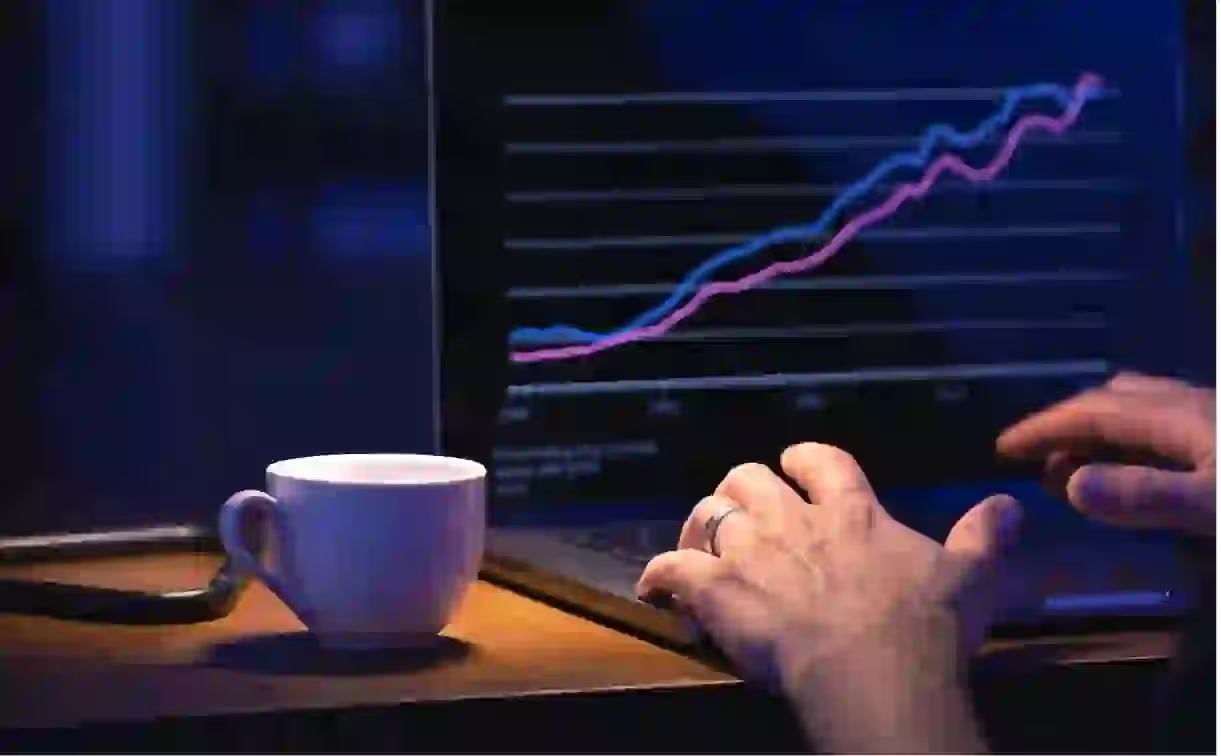
Technology has dramatically reshaped the way collectibles are bought, sold, tracked, authenticated, and even owned, transforming what was once a market limited to in-person auctions, estate sales, and niche collector groups into a global ecosystem with unprecedented access, transparency, and liquidity. Innovative platforms and applications have brought remarkable efficiency and democratization to the world of collectibles, enabling participation from collectors and investors who would previously have been excluded by geographic distance, financial barriers, lack of expertise, or simply not knowing where to find opportunities. These digital tools have fundamentally changed investing in everything from antiques and comic books to sneakers and sports memorabilia, creating new pathways for wealth creation and cultural engagement.
Fractional ownership platforms such as Rally, Otis, and Collectable have dramatically lowered the barrier to entry for collectible investing, making it possible for everyday investors to participate in markets that were previously accessible only to wealthy collectors with six- or seven-figure budgets. These innovative platforms acquire high-value items—like a 1933 Double Eagle gold coin, a first-edition Action Comics #1 featuring Superman, a vintage Ferrari competition car, or an original Andy Warhol painting—and divide ownership into shares that anyone can purchase, often starting at just $10 to $50 per share. This approach allows investors to own a proportional piece of a million-dollar collectible without needing deep pockets, extensive expertise, specialized storage facilities, or insurance capabilities. Shares can often be traded on secondary markets within these platforms during trading windows, creating liquidity in an asset class that has traditionally been highly illiquid and difficult to exit without finding a specific buyer willing to pay fair value.
Blockchain technology has introduced new levels of trust and traceability to collectibles through NFT-backed provenance and digital authentication systems that create permanent, verifiable ownership records. Non-fungible tokens (NFTs) can be used to certify the authenticity and complete ownership history of both physical and digital collectibles, creating immutable records on distributed ledgers that cannot be altered, forged, or disputed. This technology is especially useful for tracking high-value sneaker sales as pairs move through multiple owners, certifying rare artwork provenance across generations of collectors, authenticating trading cards and comics, and managing collectibles that change hands frequently through multiple transactions. Platforms like Courtyard.io merge blockchain security with real-world physical assets, providing collectors peace of mind that their investments are verifiable, their ownership is secured, and their items are protected against fraud, counterfeiting, or misrepresentation.
Social media and community platforms have become vital tools for tracking trends, discovering opportunities, evaluating potential purchases, and making informed decisions in the collectibles market. Discord servers, Reddit forums and subreddits, Instagram pages and accounts, TikTok creators, and YouTube influencers offer real-time insights, release alerts for upcoming drops, market forecasts and analysis, authentication tips, and peer reviews that help collectors stay ahead of trends and avoid common pitfalls. Communities such as r/Sneakers and r/ComicBookCollecting provide not only education and expertise sharing but also access to early release information, legitimate resale opportunities, and collective wisdom from experienced collectors who have navigated these markets for years. These communities play a significant and growing role in influencing demand and establishing value—a single post by a prominent influencer, a viral social media video, or a celebrity endorsement can spike the resale value of a limited-edition release overnight, sometimes by multiples. Community sentiment now functions as a form of soft valuation mechanism, reinforcing the cultural capital of certain items, establishing desirability hierarchies, and directly affecting market prices in ways that traditional financial markets would find unfamiliar.
As the collectibles market continues to evolve at a rapid pace, industry experts, auction house specialists, and financial analysts are looking ahead to what the future holds for this dynamic and expanding asset class. Based on recent trends, emerging technologies, demographic shifts, and changing cultural attitudes toward alternative investments, several key predictions are shaping expectations for 2025 and beyond. Understanding these trends can help collectors and investors position themselves strategically to capitalize on opportunities while managing the risks inherent in alternative investments.
One of the most consistent themes across the collectibles landscape is the growing engagement of younger investors, particularly Millennials and Gen Z, who are bringing new perspectives, substantial capital, and different collecting behaviors to markets that were previously dominated by older generations with different aesthetic preferences and cultural touchstones. These digital natives are more comfortable navigating online marketplaces, using blockchain tools for authentication and ownership verification, leveraging data analytics for investment decisions, and participating actively in social communities that influence purchasing behavior and establish cultural value. Their interest in collectibles isn't solely driven by nostalgia for childhood favorites—it also reflects a broader generational shift toward alternative assets that offer cultural and emotional resonance, identity expression, and community belonging in addition to potential financial returns.
Younger investors are expected to continue fueling demand for niche categories like streetwear and sneakers, trading cards including Pokemon and sports cards, vinyl records and music memorabilia, vintage video games and consoles, and digital art and NFTs. Platforms that offer easy access through mobile-first interfaces, user-friendly experiences, strong community features, social sharing capabilities, and gamification elements are particularly well-positioned to thrive in this environment where collecting is as much about community participation and identity expression as it is about financial returns.
As the collectible space gains legitimacy through performance data, increased transparency, and growing media coverage, institutional investors are beginning to take notice and explore ways to participate in this market. Hedge funds, private equity firms, family offices, endowments, and even traditional wealth management institutions are exploring strategies to add collectibles to diversified portfolios, whether through direct acquisition of high-value items, investment in platforms that facilitate fractional ownership, backing of authentication and storage infrastructure businesses, or development of collectible-focused investment vehicles. This influx of institutional capital could lead to greater price stability as more sophisticated and well-capitalized buyers enter the market, increased transparency and market data availability as institutions demand better information, and development of new financial products tied to collectible asset performance. However, institutional participation could also result in increased competition for the rarest and most desirable items, potentially making it more difficult for individual collectors to acquire top-tier pieces at reasonable prices.
With the rise of NFT-backed assets, blockchain-powered authentication, digital collectibles, and the general growth of technology-enabled collecting, regulators in multiple jurisdictions are stepping in to establish clearer guidelines around ownership rights, taxation requirements, and consumer protection standards. Experts anticipate greater oversight of digital marketplaces to prevent fraud, money laundering, and consumer abuse; development of classification rules to define whether NFTs and digital collectibles are securities, commodities, assets, or something else entirely under existing legal frameworks; and more detailed reporting requirements for capital gains and losses realized on collectible transactions. These regulatory efforts aim to balance encouraging innovation with ensuring accountability and consumer protection, creating an environment where both collectors and investors can participate in a safer, more transparent ecosystem while the market continues to grow, mature, and attract broader participation.
Investing in collectibles represents more than just an alternative financial strategy—it's a cultural journey that connects investors with history, artistry, human creativity, and cultural movements in ways that traditional financial assets like stocks, bonds, and index funds cannot match. In a world where financial markets are increasingly digital, algorithmic, and intangible, collectibles offer a tangible, physical connection to the past, to cultural moments that shaped society, and to the objects that represent human achievement, creativity, and aspiration. They bring together the analytical mindset of an investor with the curiosity, passion, and discernment of a collector, creating an experience that is as emotionally rewarding and personally meaningful as it is potentially financially profitable.
Unlike traditional investments where one share of stock is identical to any other share of the same company, collectibles allow you to express your personal taste, cultural values, and individual identity through your investment choices. Whether it's an intricately crafted Georgian antique that represents the pinnacle of 18th-century craftsmanship and design, a comic book featuring the debut of a superhero who shaped your childhood imagination and inspired your values, or a pair of limited-edition sneakers tied to a defining cultural moment and a designer whose work you admire, each collectible item tells a unique story. As you build a collection over time, you're also building a narrative about what matters to you, what you want to preserve for future generations, and how you see yourself in relation to culture and history. This deeply personal connection often encourages a level of due diligence, careful research, and patient long-term thinking that can strengthen your overall investing discipline and make you a more thoughtful participant in all financial markets.
The key to success in the collectible economy lies in balance, discipline, and continuous learning. Starting small allows you to experiment with different categories, learn from mistakes without catastrophic consequences, and develop expertise without exposing yourself to excessive financial risk. Learning deeply—whether through active participation in online communities, studying expert resources and auction catalogs, visiting museums and exhibitions, attending collector shows and conventions, or gaining hands-on experience examining pieces at auctions and dealer showrooms—helps you develop the connoisseurship necessary to avoid common pitfalls like overpaying for ordinary pieces, falling for sophisticated fakes and reproductions, or buying based on temporary hype rather than fundamental long-term value. Patience is absolutely essential in collectible investing; unlike stocks that can be bought and sold instantly at market prices, collectibles often take years or decades to reach their full value potential and require holding through market cycles, fashion changes, and periods when your particular collecting area may be temporarily out of favor.
The year 2025 marks a landmark moment for collectibles as a recognized and increasingly mainstream asset class. With technology empowering greater transparency through comprehensive databases and price tracking, rigorous authentication through professional grading services and blockchain provenance, new platforms enabling easier entry through fractional ownership and mobile-first experiences, and a growing cultural appreciation for unique tangible assets among younger generations, there has never been a better time to explore this fascinating market. From fractional ownership models that democratize access to million-dollar pieces previously available only to the ultra-wealthy, to blockchain-backed provenance systems that provide unprecedented confidence in authenticity and ownership history, the infrastructure for collectible investing is stronger, more sophisticated, and more inclusive than ever before in history.
Whether you're captivated by the refined craftsmanship, historical significance, and timeless elegance of antiques, the pop culture legacy and artistic achievement of comic books, or the fusion of fashion, personal identity, and cultural relevance found in sneaker collecting, the world of collectibles offers a rich and rewarding landscape to explore. Enter this market not only with the hope of financial gain and portfolio diversification but also with genuine excitement about participating in a living archive of human creativity, cultural achievement, and artistic expression. Ultimately, collectibles remind us that value isn't just measured in dollars, returns, and portfolio performance—it's also measured in stories, cultural significance, emotional connection, and the profound joy of owning something truly special that connects you to human creativity across time. In the age of artificial intelligence, algorithmic trading, and digital everything, this kind of tangible, passionate investing offers a refreshingly human way to build both wealth and meaning simultaneously.
Related posts
Alternative Investments Beyond Stocks and Bonds
DECEMBER 23, 2025
Cryptocurrency Investing Beyond Bitcoin: Top Altcoins, DeFi, and Blockchain Trends
AUGUST 27, 2025
Startup Investing Through Crowdfunding: How to Invest in Startups, Manage Risks, and Maximize Returns
SEPTEMBER 20, 2024
Investing in Wine, Whiskey, and Watches: A Complete Guide to Alternative Assets and Portfolio Diversification
SEPTEMBER 20, 2024
What Is Art Investment? Benefits, Risks, and How to Start Investing in Fine Art and Collectibles
SEPTEMBER 20, 2024